Welcome to VelSicuro.com | Cybersecurity Solutions

BUILDING A DIGITAL SOVEREIGNTY FORTRESS: UNDERSTANDING THE CENTER OF EXCELLENCE (CoE) FOR CYBER DEFENSE IN HIGHER EDUCATION

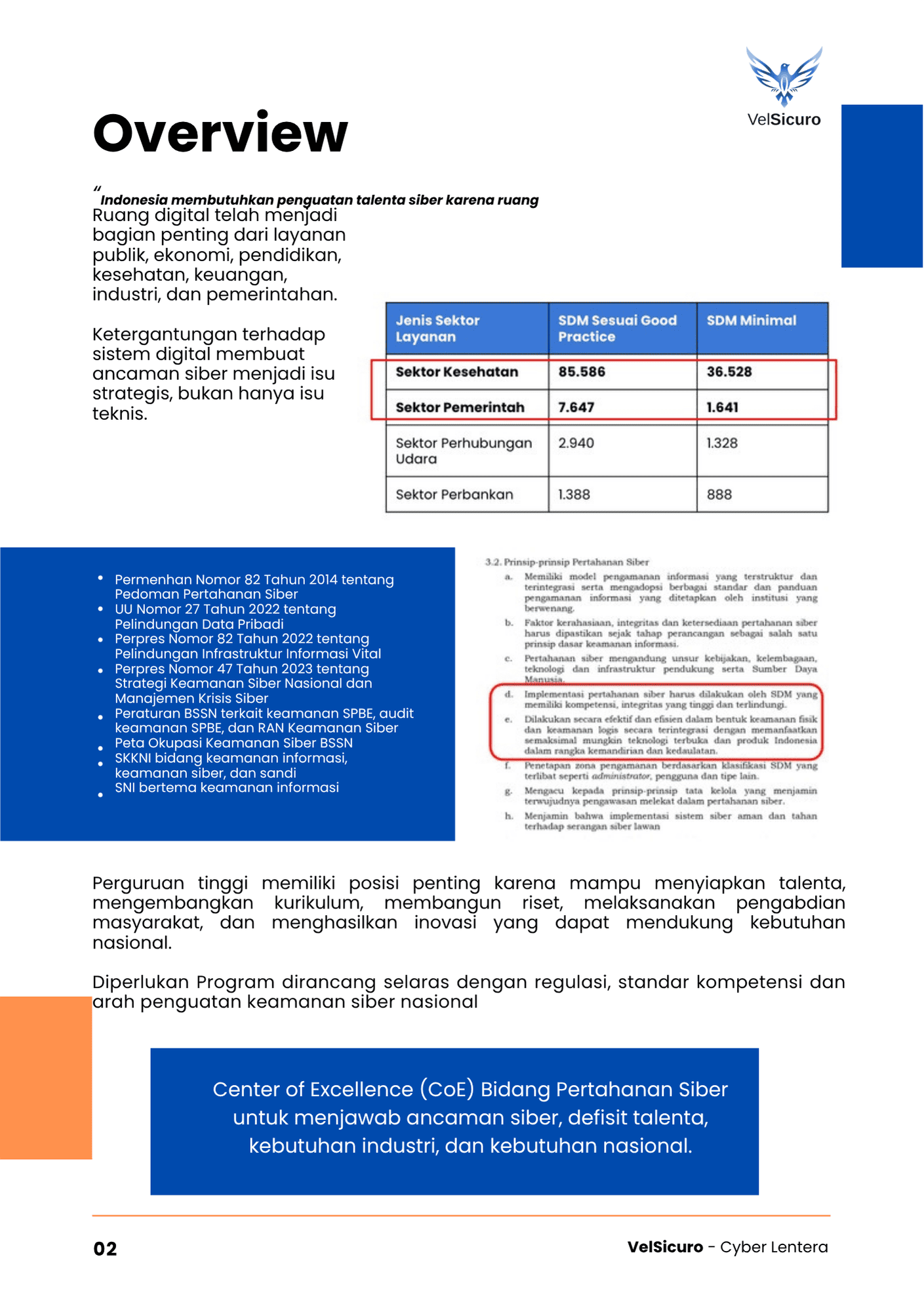
Indonesia's digital space is no longer merely a medium for social interaction; it has evolved into a strategic national infrastructure. Public services, government systems, the banking sector, and the national healthcare ecosystem all depend on the reliability of digital systems. Consequently, cyber threats can no longer be viewed as purely technical issues—they have become strategic threats to national sovereignty.

Despite this urgency, Indonesia faces a significant challenge: a shortage of industry-ready cybersecurity professionals. The gap between the actual workforce demand across critical sectors and the availability of highly skilled cyber talent remains substantial. To address this challenge, VelSicuro collaborates with universities across Indonesia to establish a strategic institutional initiative through the development of a dedicated organization within higher education institutions.

What is the Cyber Defense Center of Excellence (CoE)?

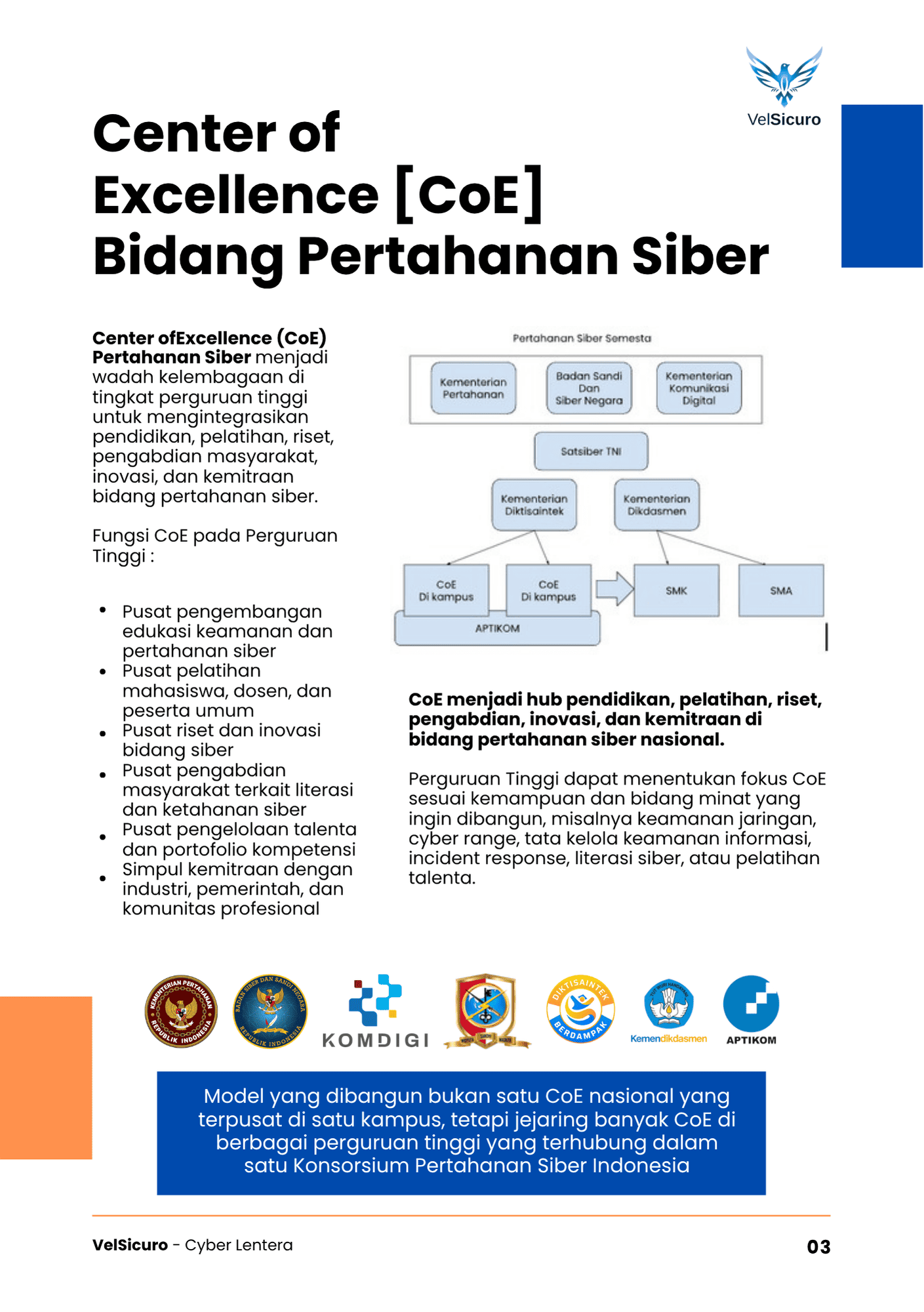
The Cyber Defense Center of Excellence (CoE) is an institutional framework established within universities to integrate the core pillars of higher education—education, training, research, and community engagement—with innovation and strategic partnerships in the field of cybersecurity.

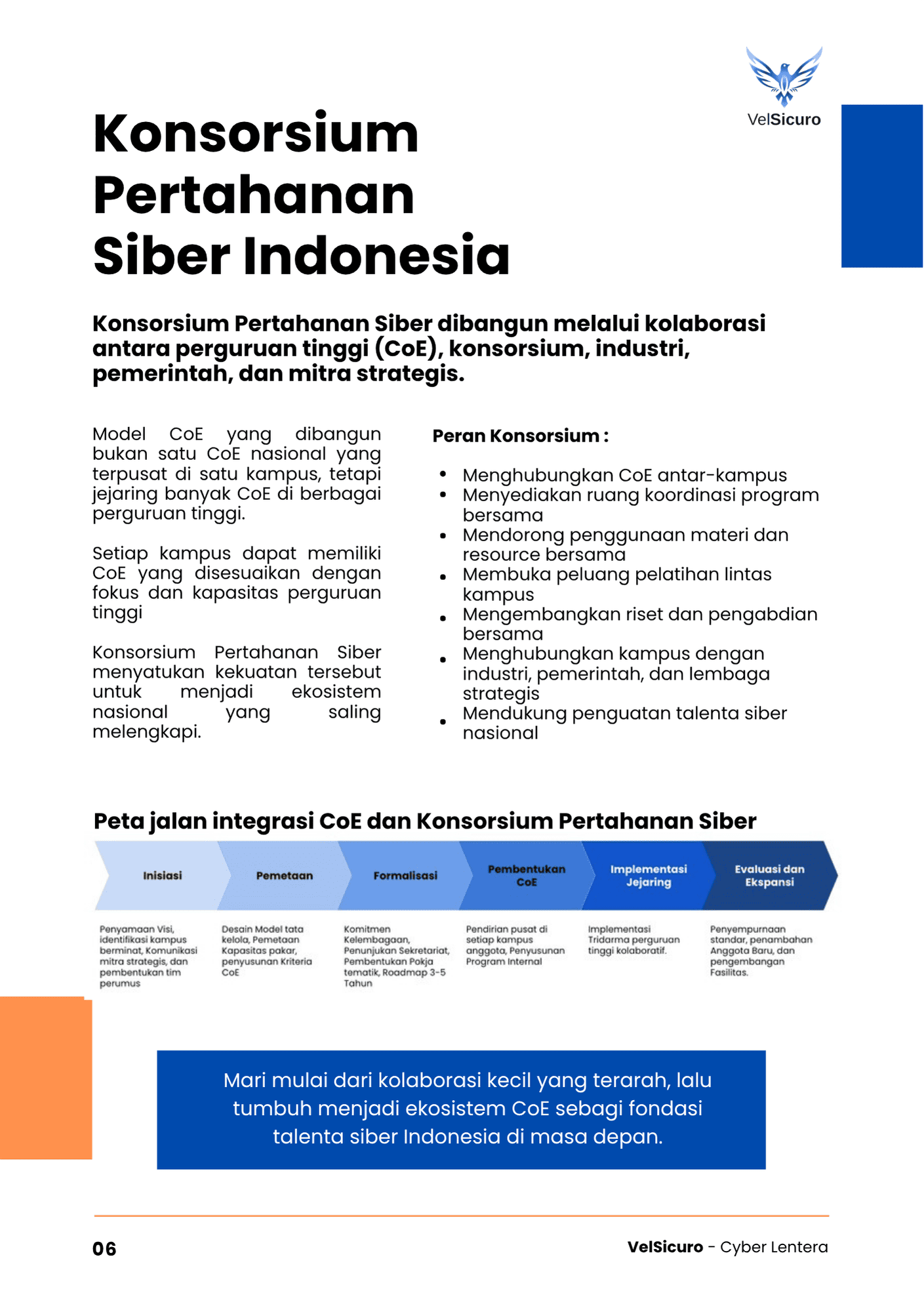
Rather than adopting a centralized model, the CoE is designed as a decentralized network. This approach enables the establishment of independent Centers of Excellence at participating universities, all interconnected under a national umbrella known as the Indonesian Cyber Defense Consortium. Through this network, each university is encouraged to develop its own area of specialization, whether in network security, Governance, Risk, and Compliance (GRC), incident response, digital forensics, or other cybersecurity disciplines.

To gain a comprehensive understanding of the program's foundation, regulatory framework, and long-term vision, please refer to the Cyber Defense CoE resource.


Hybrid Academic-Industry Cyber Workforce Ecosystem

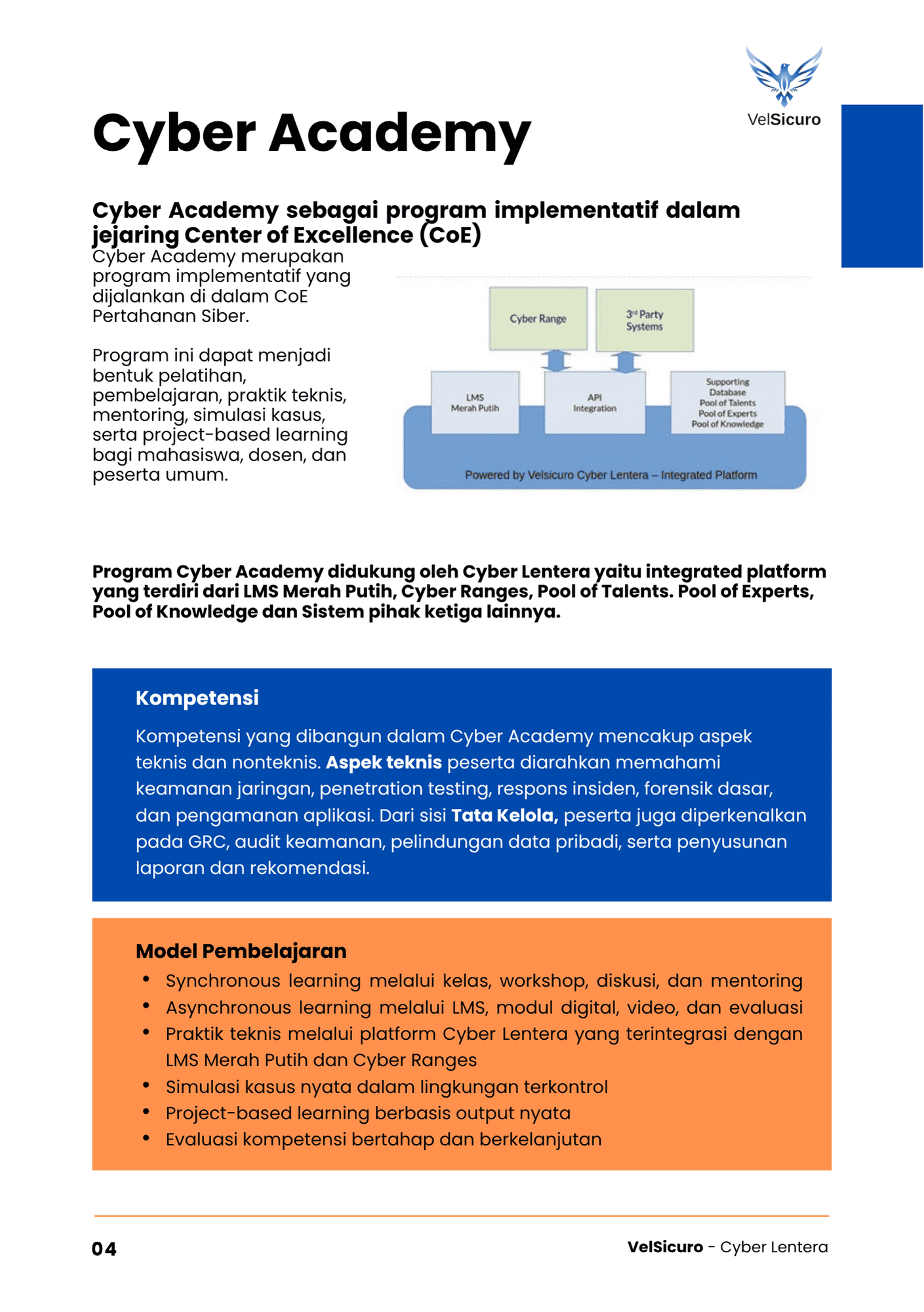
As a practical implementation of the CoE initiative, VelSicuro operates an applied learning program called the Cyber Academy. This program adopts a modern learning methodology by combining synchronous learning—including workshops, intensive classes, and mentoring sessions—with asynchronous learning through self-paced digital modules.

All instructional activities are fully supported by Cyber Lentera, an integrated platform developed by VelSicuro. The platform provides several essential components, including:

  • LMS Merah Putih: A digital Learning Management System (LMS) containing learning modules, educational videos, and competency assessment tools.

  • Cyber Range: A controlled cyber simulation environment where students and participants can practice real-world cyberattack and incident response scenarios.

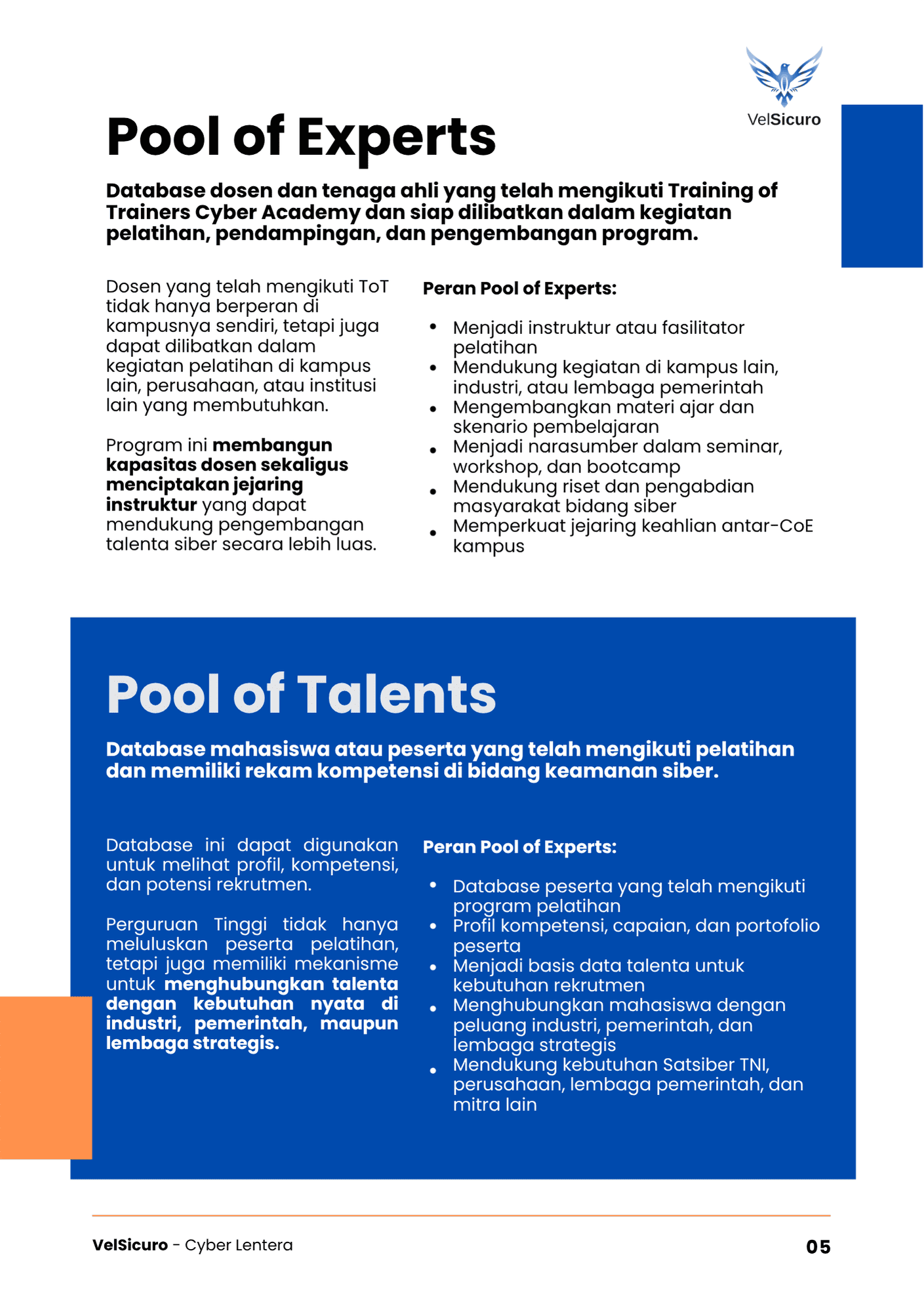
  • Pool of Experts: A database of lecturers and cybersecurity professionals who have completed the Training of Trainers (ToT) certification program.

  • Pool of Talents: A competency database of students and program graduates who are ready to be recruited by industry and strategic government institutions, including the Indonesian National Armed Forces Cyber Units (Satsiber TNI).


A Mutually Beneficial Partnership: Contributions and Benefits for Universities

VelSicuro's collaboration model is built upon the principle of sustainable and active partnership. This collaborative framework is designed to generate balanced and measurable value for all participating stakeholders.

Contributions of Each Party

  • VelSicuro's Contribution: Providing the cybersecurity technology architecture, Cyber Range laboratory environment, curriculum modules aligned with national standards (BSSN and SKKNI), and expert instructors for the Training of Trainers (ToT) program.

  • University Contribution: Preparing lecturers to participate in the ToT program, enrolling students in the learning programs, providing supporting campus facilities, and actively contributing to collaborative research and cybersecurity case studies.

Strategic Benefits for Higher Education Institutions

By joining this ecosystem, universities strengthen both their institutional reputation and the competitiveness of their graduates. Lecturers gain opportunities to expand their professional networks through cross-industry instructor collaborations, while students build practical competency portfolios that connect them directly with career opportunities in government agencies and private industry.

For more detailed information regarding the rights, responsibilities, and mutual benefits within this academic ecosystem, please refer to the CoE Collaboration Scheme and Benefits document.


Roadmap for Establishing a Center of Excellence (CoE) at Universities

The establishment of a Center of Excellence (CoE) within a university is implemented through a structured yet flexible roadmap that accommodates the readiness and capacity of each institution. The roadmap consists of the following phases:

  1. Initiation & Readiness Assessment
    The initial phase focuses on aligning strategic objectives, appointing the institution's primary point of contact (PIC), and assessing the availability of qualified lecturers, human resources, and laboratory facilities.

  2. Organizational Design & Formalization
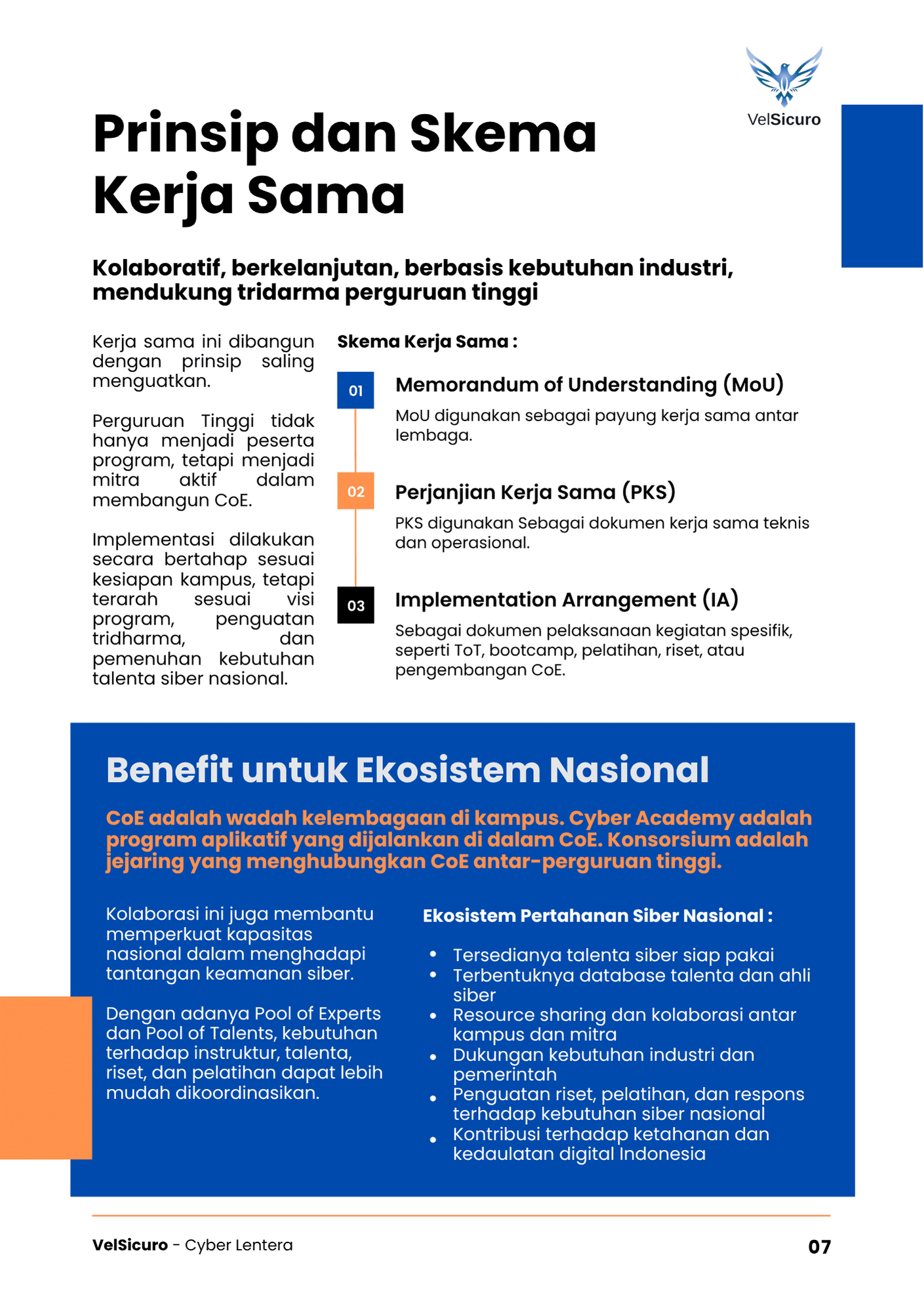
    This phase includes designing the internal governance structure of the CoE—including roles such as Laboratory Manager, Digital Forensics Team, and Security Operations Center (SOC) Analyst—followed by the formalization of legal partnership documents. Institutional collaboration is progressively established through a Memorandum of Understanding (MoU), a Cooperation Agreement (PKS), and a technical Implementation Arrangement (IA).

  3. Program Implementation & Execution
    This stage involves conducting the Training of Trainers (ToT) program for lecturers, launching Cyber Range learning sessions for students, and initiating collaborative research projects.

  4. Evaluation & National Integration
    The final phase focuses on continuous quality improvement through periodic evaluation and integrating graduates into the national Pool of Talents ecosystem.

University leaders, administrators, and academics interested in learning more about the operational framework, personnel requirements, and Standard Operating Procedures (SOP) for joining the program are encouraged to refer to the Steps to Become a CoE Partner guide.

Need Any Technology Solution

Let’s Work Together on Project

GET STARTED
velsicuro.com